

NBM Cuts the Base Rate to 5%: Impact on Prices, the Moldovan Leu, and the Economy
The National Bank of Moldova (NBM) decided to cut the base rate from 6% to 5%, continuing the process of monetary policy easing.
The decision comes in a context where inflation is on a downward path, while the economy of the Republic of Moldova needs more favorable financing conditions to support economic growth.
For households and businesses, this decision has direct implications for prices, loans, the exchange rate, and the real estate market.
What the base rate is and why it matters for the economy
The base rate is the reference interest rate set by the NBM, through which the central bank influences borrowing costs, consumption levels, private investment, liquidity in the banking system, and the exchange rate of the Moldovan leu.
How the mechanism works
High rate = more expensive money = moderated consumption = controlled inflation
Low rate = more accessible money = stimulated investment and consumption
Historical context: the base rate in the Republic of Moldova
The National Bank of Moldova cut the base rate by 100 basis points to 5.0% on December 11, 2025, marking the third interest rate reduction this year and continuing an accommodative monetary policy. Annual inflation in November remained at 6.99%, above the central target of 5.0% ±1.5%, driven mainly by regulated and food prices. Inflation is expected to return to the target range in the coming months and remain near its lower limit throughout the year.
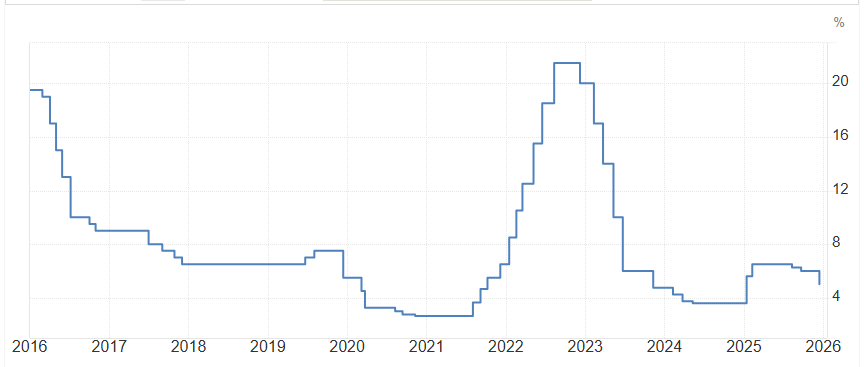
The economy continues to record positive growth, creating a favorable context for monetary policy easing. Industrial production increased in September by 9.0% compared with the same period of the previous year, while exports and imports advanced by 23.1% and 21.2%, respectively. The external environment remains generally stable, although risks persist in the energy and food sectors and in the geopolitical context.
Impact on loans and deposits in the Republic of Moldova
Interest rates are expected to decline gradually, which will improve loan accessibility for households and businesses. At the same time, lower interest rates will reduce the attractiveness of bank deposits. In this context, investors will be increasingly inclined to look for alternatives with higher return potential, turning toward other forms of investment such as capital markets or real estate.
Impact on Moldova's real estate market
The real estate market reacts directly to a lower cost of money. This means more affordable mortgage payments, followed by higher demand for housing and the development of residential projects, especially in major cities.
Chart analysis perspective (EUR/MDL)
From the perspective of long-term chart analysis, the EUR/MDL exchange rate over the past roughly 30 years indicates a general upward trend, reflecting a gradual depreciation of the Moldovan leu against the euro throughout its existence.
Two impulse phases and two correction phases can be identified over this period, with the latest correction still underway. The impulse phases show notable similarities in amplitude, duration, and growth angle, suggesting a cyclical structure in the long-term movement.
The first correction phase lasted about 10 years, and the current correction phase is also approaching a similar duration. In addition, the amplitude of the corrections remains comparable so far.
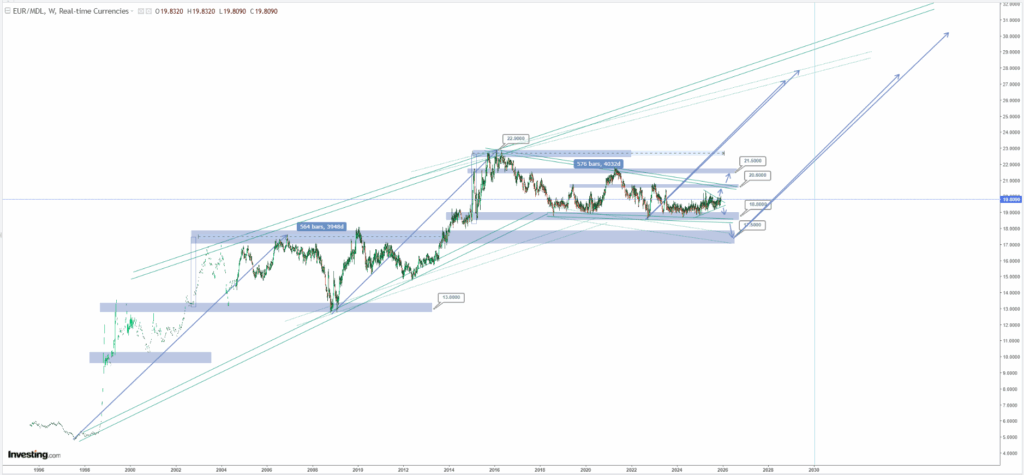
Based on one of the classic principles of financial markets, that history tends to repeat itself, the overall picture may indicate that the market is approaching the end of a long-term correction phase, with the possibility of entering a new multi-year upward trend.
However, in financial markets, price movements are influenced not only by technical factors but also by the economic foundation.
A change in the reference rate is one of the main drivers that can strengthen or weaken a currency. Cutting the rate from 6% to 5%, effectively by one fifth, has the potential to stimulate the economy and at the same time reduce the attractiveness of the national currency.
This event occurs at a moment that, from a technical perspective, may be considered favorable for initiating a new upward trend.
Conclusion:
The reference rate and inflation remain a fragile balance.
They are deeply interconnected, and the decisions of the National Bank of Moldova constantly reflect this delicate balance. The base rate cut indicates that inflationary pressures have started to ease, but the data show that inflation remains above the levels considered normal for a stable economy.
Monetary policy easing is intended to support economic activity, but the NBM's room for maneuver remains limited. A too-rapid reduction in interest rates could reignite pressure on prices and the exchange rate, while an overly restrictive policy would slow the economic recovery.
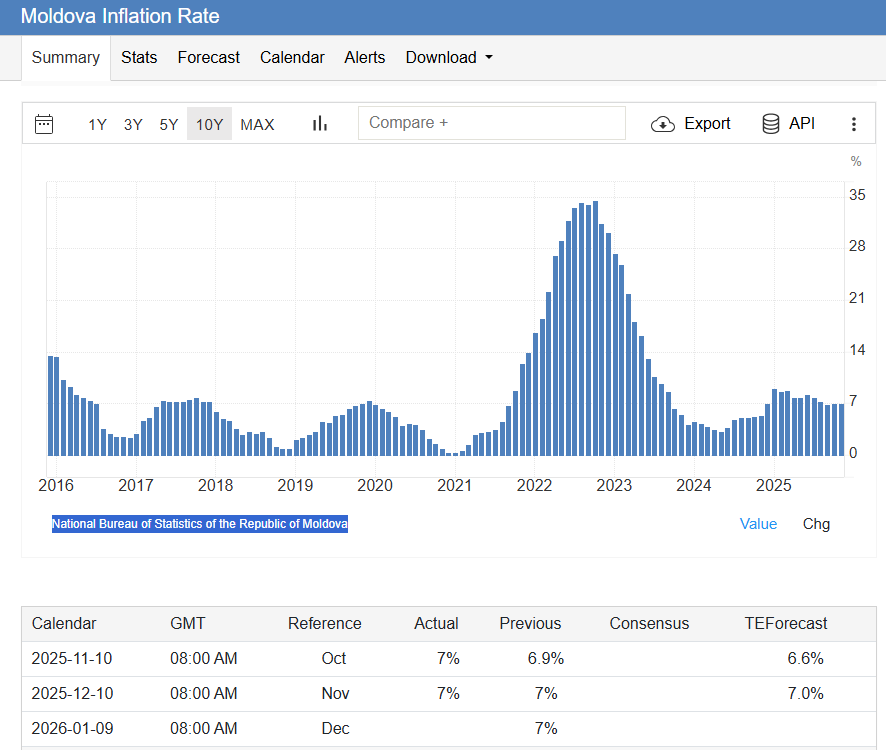
The key question remains whether inflation will return sustainably to normal levels in the near term. We will see whether the moderation trend consolidates or whether the market forces the central bank to recalibrate monetary policy again.
For investors and traders, this remains an area of maximum attention, where patience and confirmation will make the difference.
Trading.md recommends
- following inflation and NBM announcements;
- monitoring the MDL exchange rate;
- confirming scenarios through technical analysis;
- avoiding emotional decisions based exclusively on news.
Are you just starting in trading or investing? First understand NBM decisions and their impact on the markets. Financial education remains the safest investment!
We invite you to a free consultation to discuss your investment or trading strategy. Our team will provide the professional support you need.
Disclaimer:
The opinions and information presented in this material reflect our own interpretations and are for informational purposes only. They do not constitute investment recommendations or guarantees regarding the future performance of financial markets. Past performance of markets or financial instruments does not guarantee future results. Investments involve risks, including the possibility of losing the invested capital.
Official sources: bnm.md, investing.com, tradingeconomics.com
Risk warning: This article is for information and education only, reflects the situation as of its publication date and does not constitute investment advice, an offer or a recommendation to buy or sell any financial instrument. Trading leveraged instruments (Forex, CFDs) and crypto-assets carries a high risk of losing your capital. Past performance does not guarantee future results. Before investing, assess your objectives and risk tolerance and, if needed, consult a licensed adviser. Details: Disclaimer & Risk Warning.
Translated from the Romanian original with AI assistance.